
HERSHE News
Is a Double Chin Caused by Fat or Sagging Skin?
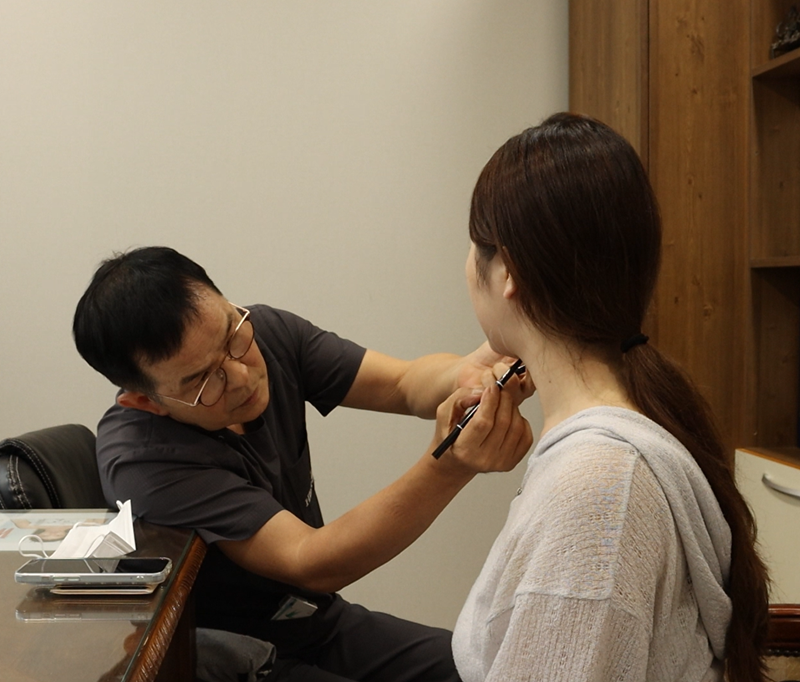
A double chin may not seem particularly noticeable when you look in the mirror, but it can suddenly become much more apparent in photographs.
This is especially true if your jawline has become less defined even though you have not gained much weight,
or if you have lost weight through dieting but the fullness beneath your chin remains.
You may find yourself wondering: “Is my double chin simply caused by fat?”
“Will it disappear if I reduce the fat under my chin?”, “I don’t have much facial fat, so why does my jawline still look saggy?”
In fact, a double chin is often difficult to explain by fat alone.
In addition to subcutaneous fat beneath the chin, several factors may contribute, including muscle laxity,
reduced skin elasticity, skeletal structure, deeper fat layers, and posture.
So how can you tell whether your double chin is caused by fat, sagging skin, or another structural factor?
Today, we’ll take a closer look at the various causes of a double chin and the approaches that may be considered depending on the underlying cause.

Is a Double Chin Really Caused by Fat?
The most commonly considered cause is submental fat, or fat beneath the chin.
When body weight increases and subcutaneous fat accumulates beneath the chin,
the boundary between the jaw and neck can become less defined, creating the appearance of a double chin.
In these cases, losing weight may reduce some of the fat beneath the chin and improve the appearance to a certain extent.
However, there is an important point to consider.
For some people, the double chin remains even after weight loss.
In such cases, it may be necessary to evaluate factors other than superficial fat,
including muscle laxity, the structure of the jawline and neckline, deeper fat layers, and skin elasticity.
In other words: Having a double chin does not necessarily mean that there is simply too much fat.
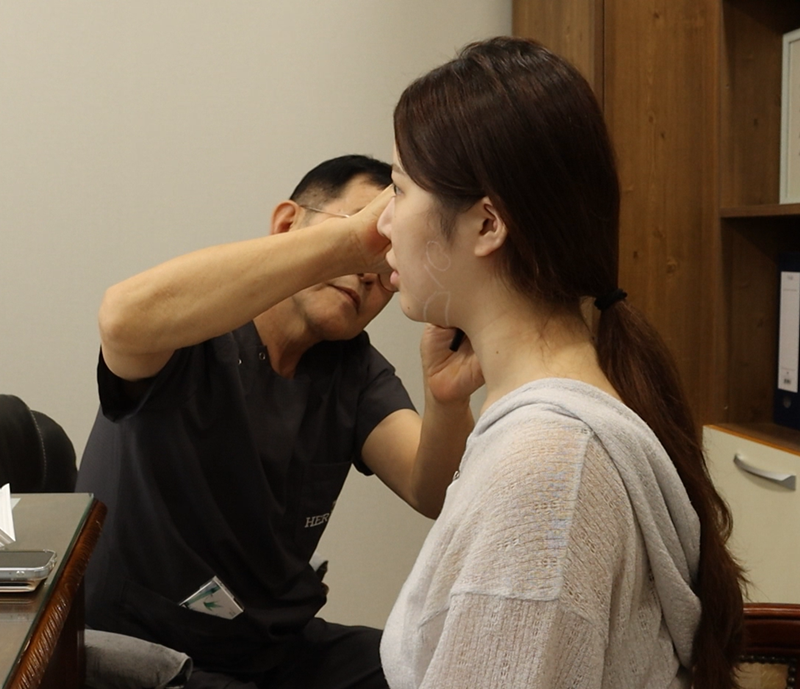
What Are the Main Causes of a Double Chin?
1. Submental Fat
The amount of subcutaneous fat beneath the chin is one of the first factors to evaluate.
When a significant amount of fat accumulates in this area, the jawline may appear rounded from the front,
while the boundary between the chin and neck may look less defined from the side.
If a double chin appeared together with weight gain, submental fat may be one of the main contributing factors.
Depending on the individual condition, weight management or treatments aimed at reducing localized fat may be considered.
However, not everyone with submental fat requires the same approach.
The amount and location of fat, skin elasticity, and underlying structure beneath the chin should all be evaluated together.
2. Reduced Skin Elasticity
Another important factor is sagging of the skin and soft tissue.
As we age, the skin gradually loses elasticity, and the tissues connecting the face and neck may begin to descend.
In this situation, even if there is not much excess fat, the jawline may appear less defined and the skin beneath the chin may fold or sag,
creating the appearance of a double chin.
Reduced skin elasticity may be contributing if: Your jawline has become less defined than before
The area beneath your chin has begun to sag despite little change in weight, The skin under your chin appears loose
The boundary between your chin and neck is less distinct than it used to be
Therefore, when evaluating a double chin, it is important to assess not only the amount of fat but also how effectively the skin and soft tissue support the jawline.
3. Laxity of the Muscles Beneath the Chin
One factor that is often overlooked is the condition of the muscles beneath the chin.
When structures such as the platysma, which extends from the jaw area toward the neck,
become lax or separate, the distinction between the jawline and neckline may become less defined.
In these cases, the area beneath the chin may appear folded or saggy even when there is relatively little fat.
So if you are wondering: “I’m quite slim, so why do I still have a double chin?”
it may be necessary to evaluate not only the fat but also the condition of the platysma and surrounding tissues.
4. Jaw and Skeletal Structure
Your natural jaw structure can also influence how prominent a double chin appears.
For example, if the chin is relatively short or recessed, the boundary between the chin and neck may appear less defined,
making a double chin look more noticeable even when there is not a large amount of fat.
In these cases, reducing fat alone may not necessarily create the desired jawline.
For this reason, it is important to consider not only fat but also the position of the chin, shape of the lower jaw, and angle between the jawline and neck.
5. Posture and Lifestyle Habits
Spending long periods looking down at a smartphone or computer can lead to a forward-head posture.
When this posture is repeated, the chin may move inward, making the skin and soft tissues beneath it more likely to fold.
A forward-head or “text neck” osture is a common example.
Posture alone cannot necessarily be considered the direct cause of a double chin.
However, if submental fat or skin laxity is already present, certain postures can make the double chin appear more prominent.
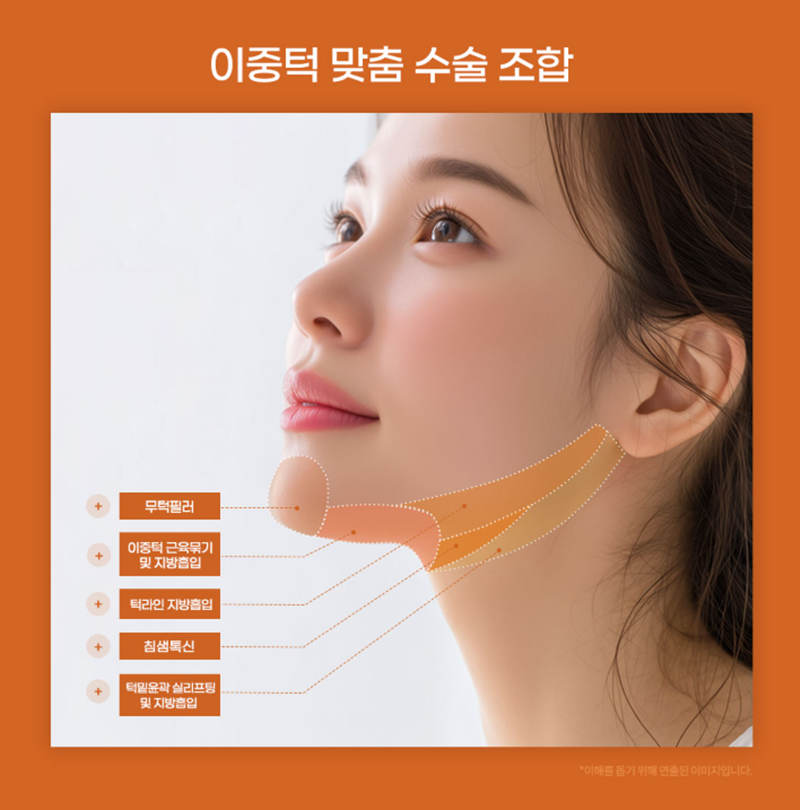
So, Is My Double Chin Caused by Fat or Sagging Skin?
The following points may provide a simple way to understand the possible cause.
1. The area beneath my chin became fuller as I gained weight
Subcutaneous fat beneath the chin may be a significant contributing factor.
2. My double chin remains even after losing weight
Other factors such as muscle laxity, skeletal structure, deeper fat layers, and skin elasticity may need to be evaluated.
3. The skin beneath my chin looks loose or saggy
Reduced skin elasticity and soft-tissue sagging may be contributing factors.
4. My face is relatively slim, but the area beneath my chin still folds
In addition to fat, the condition of the platysma and the skeletal structure of the jaw may need to be considered.
5. My double chin becomes more noticeable when I lower my head
Fat, muscles, skin, and posture may all contribute to its appearance.
Does the Treatment Approach Change Depending on the Cause?
Yes. Different causes may require different approaches.
For example, if submental fat is the primary cause, methods aimed at reducing localized fat may be considered.
On the other hand, if there is relatively little fat but laxity of the muscles beneath the chin is making the jawline appear less defined,
a structural approach such as platysma plication for the double chin area may be discussed after appropriate evaluation.
If both excess fat and muscle laxity are present, both factors may need to be considered when planning treatment.
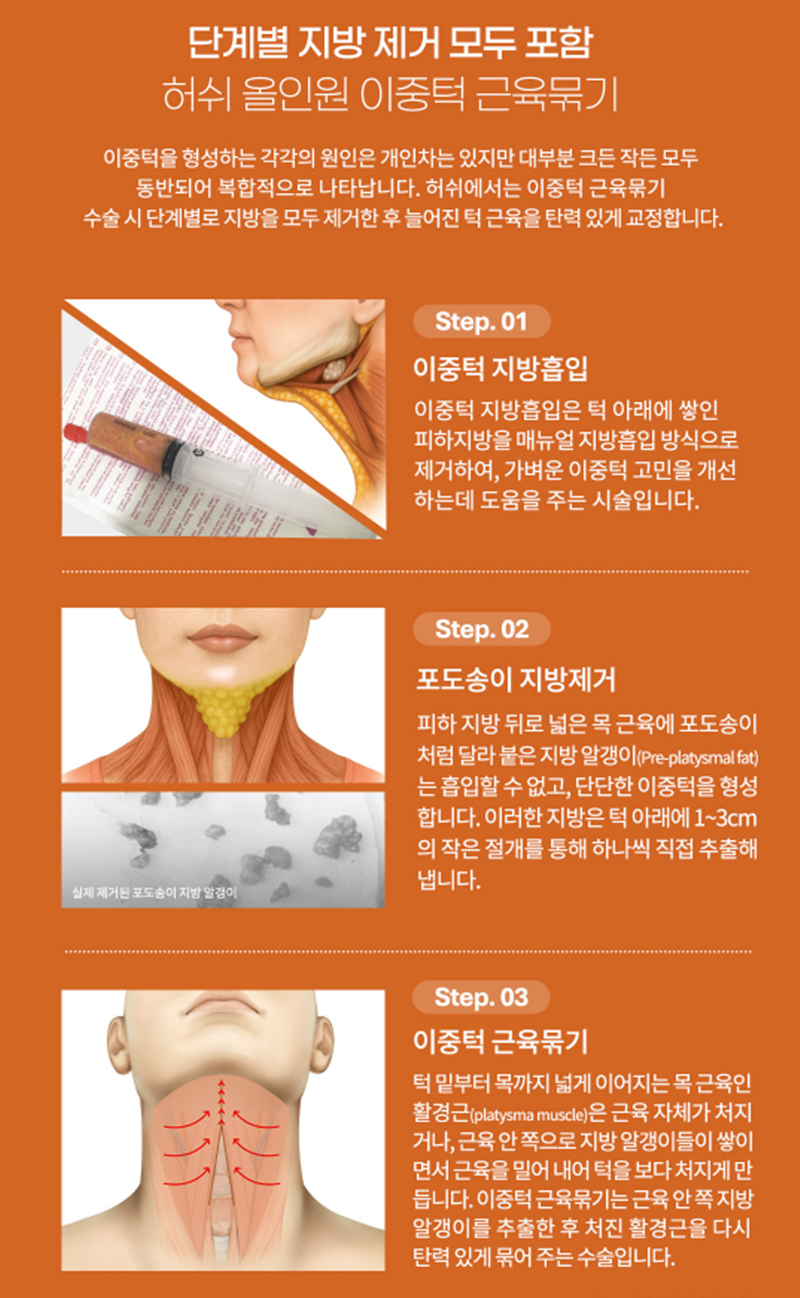
A double chin can result from a combination of factors, including subcutaneous fat, muscle laxity,
reduced skin elasticity, deeper fat layers, skeletal structure of the jaw, posture, and lifestyle habits.
Therefore, if your double chin remains after weight loss or if your face is relatively slim but the area beneath your chin still appears saggy,
it may be more appropriate to identify the underlying cause rather than simply assuming that you need to lose more weight.
The appropriate approach may differ depending on whether fat is the main factor,
whether skin laxity is contributing, or whether the muscles and skeletal structure beneath the chin are also involved.
The first step in improving a double chin is not simply removing tissue, but accurately identifying why the double chin has developed.
A medical consultation can help comprehensively assess the amount and distribution of fat beneath the chin,
skin elasticity, muscle condition, and skeletal structure before determining an appropriate treatment plan.
 다음글
다음글 게시물이 없습니다.

 힙업리프팅으로 애플힙 뒤태 만들수있나요? 힙업성형 Q&A
 어깨필러 상담부터 시술과정까지, 직각어깨 REAL 현장
 쌍수하고 술 언제부터 마셔도 되나요?


 이전글
이전글