
HERSHE News
Why Do Some People Look Broader-Shouldered Even at the Same Weight?
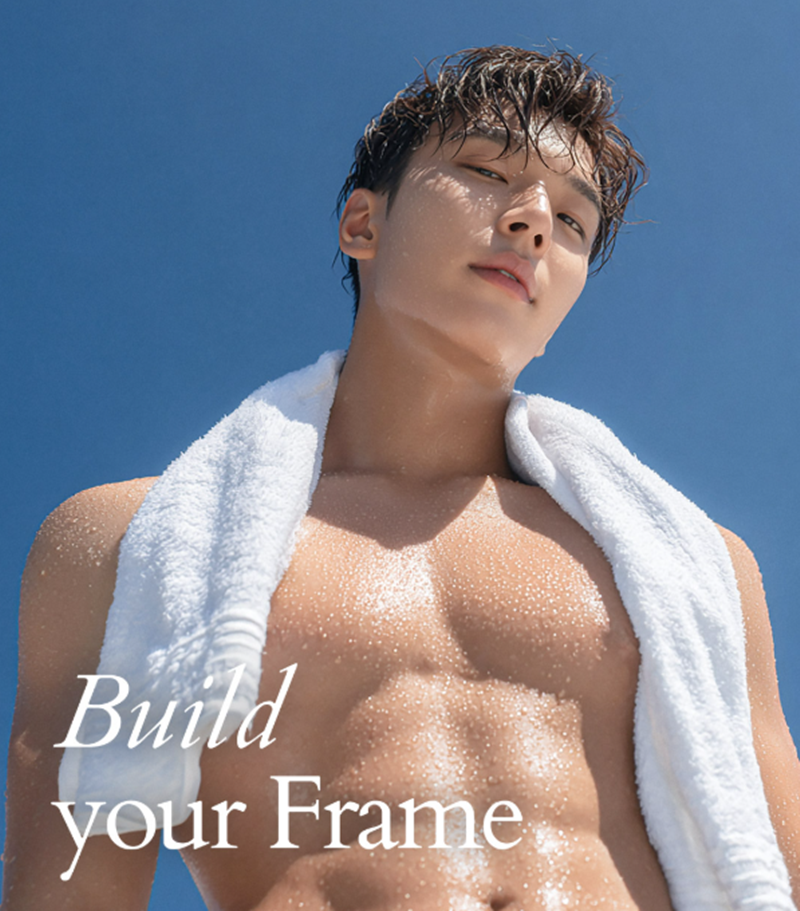
Even among people of similar height and weight, some naturally appear to have a stronger, broader build.
This is especially noticeable in men. Even when wearing the same type of T-shirt, one person may look broad-shouldered and well-built,
while another may appear relatively slender regardless of their actual body weight.
For this reason, men with slim builds or those who feel dissatisfied with their upper-body proportions may have wondered:
“Why does he look broader-shouldered even though we weigh about the same?”
“Why doesn’t my shoulder line change as much as I expected, even with exercise?”
“Will gaining weight make my shoulders look broader?” “If I naturally have a narrow frame, is there anything I can do?”
In fact, body weight does not necessarily correspond to how broad the shoulders appear.
Even at the same weight, body shape can look completely different depending on skeletal structure, muscle development,
the contour from the shoulders to the arms, neck-to-shoulder proportions, posture, and other factors.
Today, we will take a closer look at why some people appear to have broader shoulders despite having the same body weight,
as well as the various factors that determine the male shoulder line.
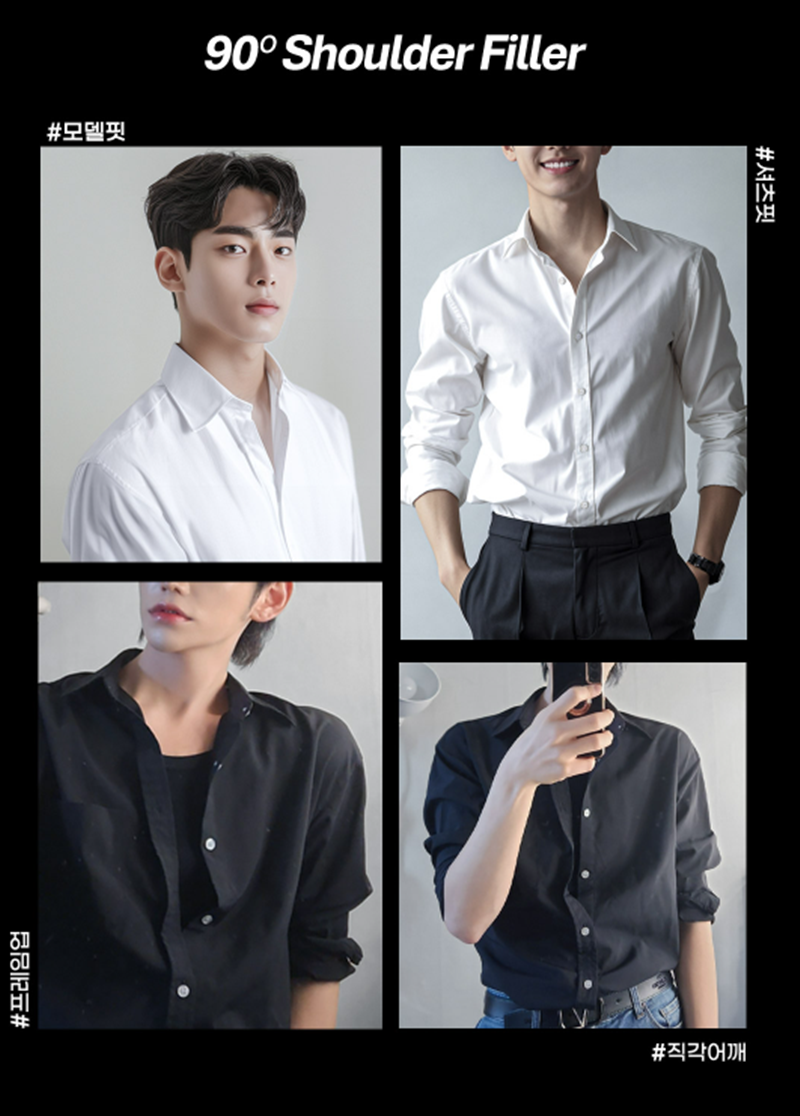
The Same Weight Does Not Mean the Same Body Shape
We often assume that the more someone weighs, the larger their overall build will appear.
However, even at the same weight, overall body proportions can look very different depending on the distribution of fat and muscle,
skeletal size, and the balance between the upper and lower body.
For example, two people may both weigh 70 kg, but one may have greater upper-body muscle mass and a naturally broader shoulder structure.
Another person may carry more of their weight around the abdomen or lower body, or may have a skeletal structure that makes the shoulders appear narrower.
In other words, body weight is simply a number. The body shape we actually see is determined by multiple factors working together.
For men in particular, the ratio between the shoulders and waist can significantly influence the overall appearance of the upper body.
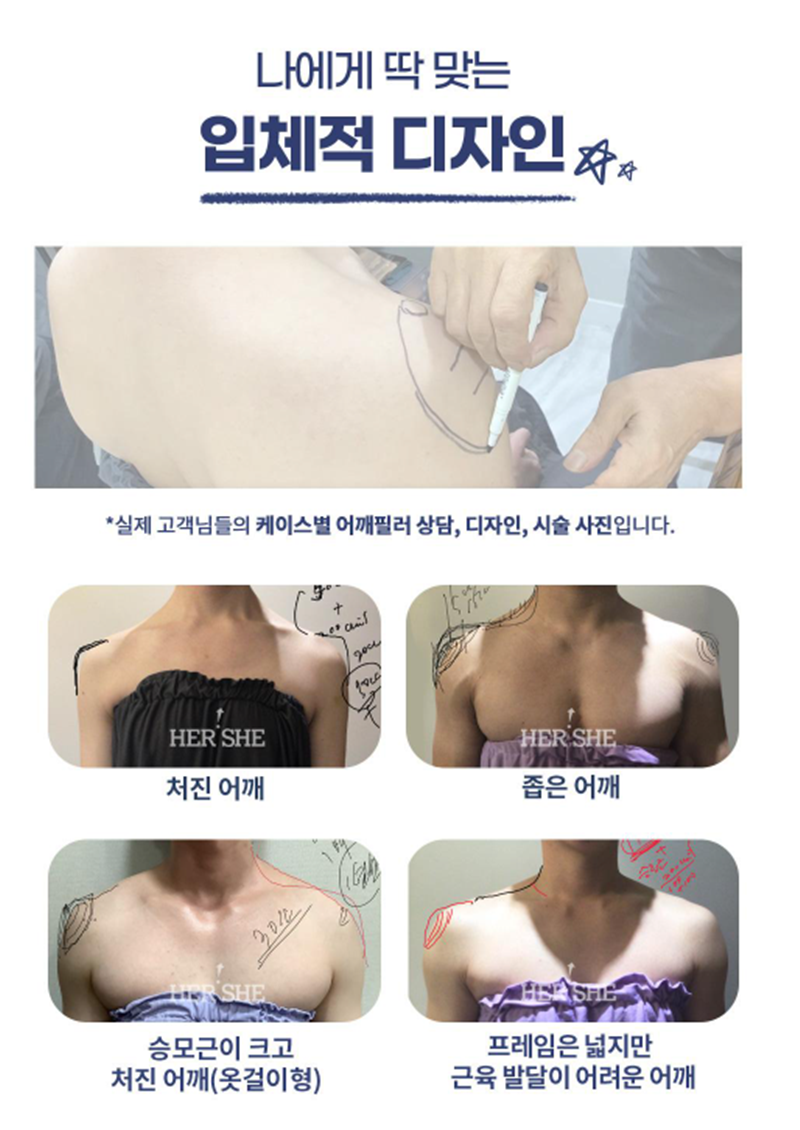
The First Reason Shoulders Look Broader: Skeletal Structure
The most fundamental factor is a person’s natural skeletal structure.
The length and orientation of the clavicles, position of the shoulder blades, and overall width of the upper body vary from person to person.
Therefore, even with the same amount of muscle, some people may appear to have broader shoulders because of their skeletal structure,
while others may appear relatively narrow.
In particular, when the horizontal line from the clavicle to the outer shoulder appears longer, the upper body may look broader and more open.
On the other hand, if the skeletal frame itself is narrow or the outer shoulders slope downward, a person may appear slimmer regardless of body weight or muscle mass.
These skeletal characteristics are also among the factors that are difficult to significantly change through exercise alone.
The Second Reason: Muscle Development
The shoulders are not defined by bones alone.
The development of the deltoids, trapezius, and surrounding muscles also affects the overall shoulder silhouette.
As the shoulder muscles develop through exercise, the width and volume of the upper body may appear different.
In particular, well-developed lateral deltoids can make the shoulders appear wider when viewed from the front.
This is why many men work out specifically to build broader-looking shoulders.
However, consistent exercise does not necessarily create the same shoulder shape for everyone.
This is because natural skeletal structure, muscle shape, and the anatomical starting and ending points of the shoulders vary from person to person.
The Shoulder “Line” Matters Too
The actual horizontal width of the shoulders is not the only factor that determines whether they look broad.
The way the shoulder line flows also affects the overall impression of the body.
For example, if the line from the neck to the shoulder slopes downward sharply or if the outer shoulder lacks volume,
the shoulders may appear narrower than their actual width.
Conversely, if the transition from the neck to the shoulders looks relatively natural and the outer shoulder contour flows smoothly, the upper body may appear more balanced.
For this reason, rather than simply wanting to “make the shoulders bigger,” there is growing interest in achieving:
“A shoulder line that does not look too narrow” “A balanced upper-body silhouette in a T-shirt”“A naturally defined masculine shoulder line”
In other words, the focus is increasingly shifting toward the overall silhouette and proportions of the upper body.
Male Shoulder Filler: Is More Volume Always Better?
One of the most common questions men have when considering shoulder filler is how much volume is needed.
However, simply adding a large amount of filler does not necessarily create a natural-looking shoulder line.
For men in particular, rather than focusing on excessive volume, it may be more important to design a natural shoulder contour that complements the existing body shape.
Height, weight, upper-body muscle mass, neck length, and chest size all vary from person to person.
Therefore, rather than applying the same amount to everyone, the existing shoulder shape and overall body proportions should be evaluated together.
For example, for someone with a slim build, it may be more appropriate to focus on creating
a smooth transition from the existing skeletal structure rather than dramatically increasing shoulder volume.
For someone who already has a certain degree of upper-body muscle development, the treatment plan may need to be designed according to the overall silhouette.
Ultimately, the important question is not simply “How much should be added?” but rather “What kind of shoulder line should be created?”
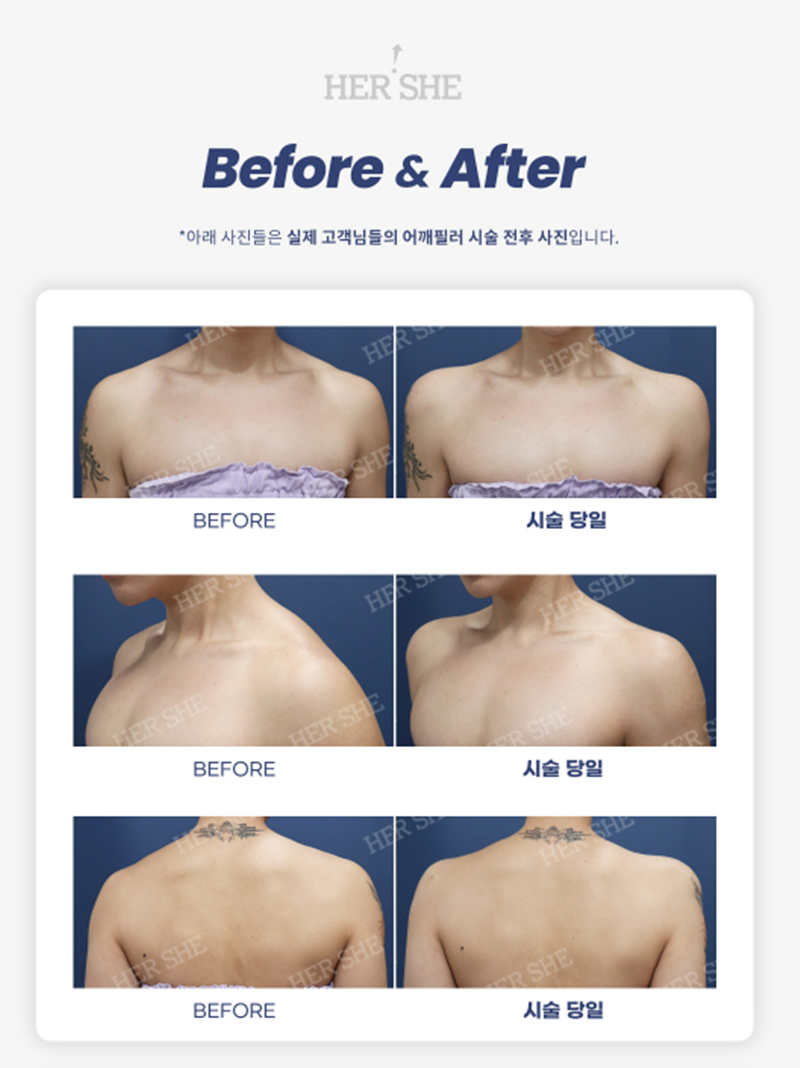
What Do People Who Look Broad-Shouldered at the Same Weight Have in Common?
To summarize, there is no single reason why some people appear to have broader shoulders despite weighing the same.
1. Natural Skeletal Structure
Differences in clavicle length, shoulder width, and overall upper-body structure can influence how broad the shoulders appear.
2. Shoulder Muscle Development
The development of the deltoids and surrounding muscles can change the apparent volume and width of the upper body.
3. Shoulder Shape and Contour
The silhouette from the neck to the outer shoulders can create a different impression even when the actual shoulder width is similar.
4. Upper-Body-to-Waist Ratio
The broader the shoulders appear in relation to the waist, the wider and more balanced the upper body may look.
5. Posture
Rounded shoulders or a hunched posture can make the shoulders appear narrower than their actual width.
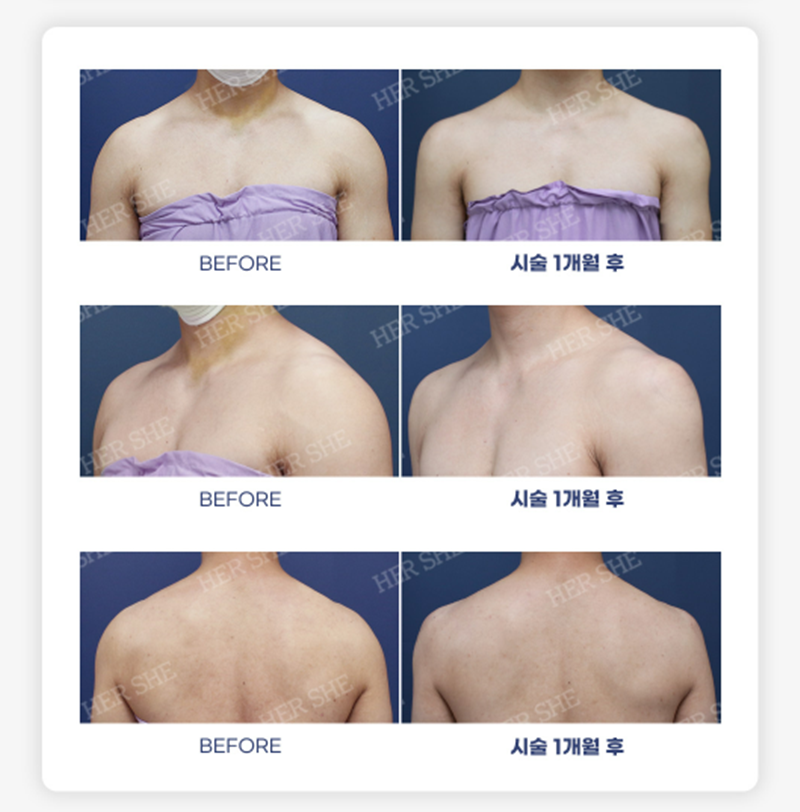
So, why do some people look broader-shouldered even at the same weight?
The reason is not simply a difference in body weight. A combination of factors—including skeletal structure, muscle development,
shoulder shape and volume, upper-body-to-waist proportions, posture, and overall silhouette—determines how broad the shoulders appear.
For men with a slim build in particular, simply gaining weight may not necessarily create the desired shoulder line.
Even with consistent exercise, natural skeletal structure and shoulder shape may limit how much the overall silhouette changes.
In these cases, it is important to first assess your individual body structure and determine whether the concern can be addressed through exercise
and lifestyle adjustments or whether other options may be considered through consultation.
Most importantly, rather than trying to recreate a trendy broad-shouldered physique,
the goal should be to identify the shoulder line that looks most natural and balanced for your individual body proportions.
 다음글
다음글 게시물이 없습니다.

 힙업리프팅으로 애플힙 뒤태 만들수있나요? 힙업성형 Q&A
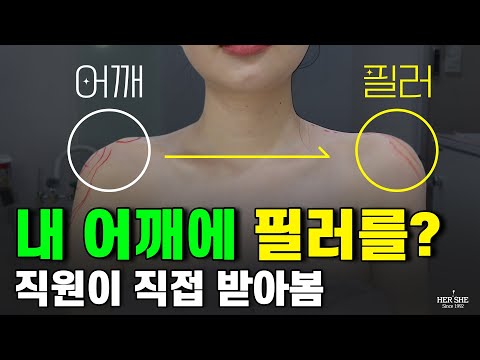 어깨필러 상담부터 시술과정까지, 직각어깨 REAL 현장
 쌍수하고 술 언제부터 마셔도 되나요?


 이전글
이전글