
HERSHE News
Should 90 Degrees Shoulder Filler and Trapezius Toxin Treatment Be Combined?

If you are concerned about your shoulder line, you may have wondered about this at least once.
“Could combining 90 Degrees Shoulder Filler with trapezius toxin treatment create a more attractive shoulder line?”
Recently, rather than simply making the shoulders look wider, more people are interested in refining the overall upper-body silhouette
by considering the line from the neck to the shoulders, the volume at the shoulder ends,
and even the height of the trapezius muscles.
In particular, if developed trapezius muscles make the shoulders look raised while the shoulder ends or upper shoulders appear hollow,
it may be difficult to achieve the desired change with only one procedure.
What roles do 90 Degrees Shoulder Filler and trapezius toxin treatment each play, and when might they be considered together?

Shoulder shape is not determined by bone structure alone.
Even among people of the same height and weight, one person’s shoulders may look straight and even, while another person’s may look rounded or sloped.
Several factors can influence this.
1. Length and shape of the clavicles
2. Position of the shoulder bones
3. Degree of trapezius muscle development
4. Fat and muscle around the shoulders
5. Volume at the ends of the shoulders
6. Posture and rounded shoulders
7. Overall body type and upper-body proportions
Therefore, a concern such as “my shoulders do not look attractive” can have several possible causes.
For this reason, when refining the shoulder line, it is important not to consider only one
approach—such as adding volume or reducing muscle—but first to identify
which features are disrupting the shoulder line.
What Does 90 Degrees Shoulder Filler Do?
As its name suggests, 90 Degrees Shoulder Filler is used to supplement insufficient volume in the shoulder area.
If the upper shoulders are hollow or the line extending to the shoulder ends does not connect naturally,
volume can be added to the deficient areas with the aim of creating a smoother shoulder line.
For example, when viewed from the front, neck → clavicle → shoulder if the shoulder area appears hollow along this line,
insufficient volume in that area may make the shoulders look narrow or sloped.
In such cases, appropriately supplementing the deficient area may be more relevant than reducing muscle.

How Is Trapezius Toxin Treatment Different?
It may be easier to understand trapezius toxin treatment as an approach in the opposite direction.
When the trapezius muscles are overly developed, the treatment is intended to reduce their movement and tension,
with the expectation that muscle volume may decrease.
Developed trapezius muscles can raise the line from the neck to the shoulders, making the neck look short, the shoulders look raised,
the upper body look bulky, and the shoulder line appear rounded and steep.
In these cases, reducing an overly developed area may need to take priority over filling a deficient area.

In Short
The difference between the two procedures is relatively straightforward.
1. 90 Degrees Shoulder Filler : An approach that fills deficient areas
Supplements upper-shoulder volume
Refines the line at the shoulder ends
Connects hollow areas more naturally
2. Trapezius Toxin Treatment: An approach that reduces overly developed areas
Reduces trapezius muscle volume
Softens a raised-looking shoulder line
Refines the line connecting the neck and shoulders
In other words, 90 Degrees Shoulder Filler = adding volume,
trapezius toxin treatment = reducing muscle prominence. This is a simple way to understand the difference.

When 90 Degrees Shoulder Filler Alone May Be Insufficient
For example, suppose someone receives 90 Degrees Shoulder Filler because the ends of the shoulders look hollow.
The filler can supplement deficient volume, but if the trapezius muscles are highly developed, the raised contour between the neck and shoulders may remain.
In this case, the shoulder ends may gain volume while the trapezius muscles still appear relatively prominent.
Therefore, “hollow shoulders” + “highly developed trapezius muscles” when both features are present, rather than considering only 90 Degrees Shoulder Filler,
the condition of the trapezius muscles should also be assessed.
When Trapezius Toxin Treatment Alone May Be Insufficient
Conversely, even if trapezius toxin treatment reduces muscle prominence, the shoulder ends may still lack volume.
As the trapezius muscles decrease, the neck-to-shoulder line may look more refined, but the hollow areas at the shoulder ends are not filled.
Therefore, “developed trapezius muscles” + “hollow shoulder ends” when both are present, the two approaches may be reviewed together according to each cause.

Who Might Consider Both Procedures Together?
If you have the following features, you can discuss whether combined treatment may be appropriate.
1. Highly Developed Trapezius Muscles
The shoulders look raised and the neck appears short even at rest.
2. Hollow Shoulder Ends
Insufficient upper-shoulder volume makes the shoulder line look as though it slopes downward.
3. A Disconnected-Looking Line from the Neck to the Shoulders
A large difference between trapezius height and shoulder volume prevents the line from connecting naturally.
4. A Desire for a Squarer Shoulder Appearance
Rather than simply making the shoulders wider, the goal is to refine both the neck-to-shoulder line and the shape of the shoulder ends.
5. Concerns About Upper-Body Proportions
The shoulders look narrow or sloped while the trapezius muscles appear relatively prominent, making the upper body look heavy.

Creating an attractive shoulder line does not necessarily require adding a large amount of volume or substantially reducing muscle.
If the trapezius muscles are developed, their prominence can be reduced, while insufficient shoulder volume can be supplemented only as needed.
It is also important to consider your bone structure, body type, and left-right balance throughout the process.
If you are considering 90 Degrees Shoulder Filler and trapezius toxin treatment, rather than automatically undergoing both procedures,
it is advisable to first identify what is shaping your current shoulder line and then select the approach that is needed.
In particular, filler procedures may involve risks such as vascular complications,
while toxin treatment may cause adverse reactions that vary by individual, including bruising, pain,
and temporary muscle weakness. A decision should therefore be made after sufficient consultation with medical professionals before treatment.
 다음글
다음글 게시물이 없습니다.

 힙업리프팅으로 애플힙 뒤태 만들수있나요? 힙업성형 Q&A
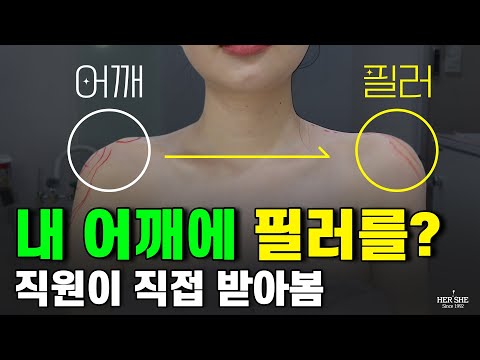 어깨필러 상담부터 시술과정까지, 직각어깨 REAL 현장
 쌍수하고 술 언제부터 마셔도 되나요?


 이전글
이전글