
HERSHE News
Where Should You Begin with Skin Care?

‘I want to take better care of my skin, but I don't know where to start.’‘I've tried products that were said to be good, but my skin doesn't seem to change much.’
‘I'm concerned about my pores and fine lines. What kind of care should I consider?
’When you decide to begin a skin care routine, the number of choices can feel overwhelming.
You may wonder whether to start with hydration care,focus on pores,consider a lifting treatment,try a skin booster,
or receive a device-based treatment such as laser or radiofrequency.
However, choosing the name of a procedure is not the first step in skin care.
The first step is to understand the current condition of your skin.
Even among people of the same age, skin thickness, elasticity, hydration, sebum levels,
facial fat volume, and the degree of sagging can differ, so the care they need may also differ.
For those beginning skin care for the first time, or those who have tried several treatments but still do not know what they need,
let's look step by step at how to find the right starting point for skin care.

What Should You Check First in Skin Care?
Before beginning skin care, it can be helpful to ask yourself the following questions.
1. What is your main skin concern right now?
Is it enlarged-looking pores?Fine lines?Dryness?Reduced elasticity?Facial sagging?Uneven skin tone or texture?
Even if you have several concerns, try choosing the one you would most like to address first.

Start by Checking Hydration—the Foundation of Skin Care
If your skin feels rough or tight, or makeup does not sit well, first check your skin's hydration level.
When skin becomes dry,its texture can become rough,fine lines can look more noticeable,makeup may become patchy,and the complexion may appear dull.
Skin can become especially dry during seasonal changes or in environments with frequent heating and air-conditioning.
In such cases, rather than immediately seeking an intensive treatment, it is advisable to begin by using moisturizer consistently, making sunscreen part of your daily routine, and avoiding excessive skin irritation.
If dryness or rough texture persists despite sufficient home care, you may consult a medical professional about suitable skin care options based on your skin condition.
If Pores Concern You, First Ask Why They Look Larger
When people are concerned about pores, they often begin by looking for ways to make them smaller.
However, pores can appear noticeable for more than one reason.Common contributing factors includesebum production,dead skin cells, skin texture, skin elasticity
, changes in the skin surrounding the pores, and changes following acne or inflammation.These factors can all affect the appearance of pores.
In particular, when skin elasticity begins to decline, the skin around the pores may loosen, making the pores appear larger.
Therefore, if pores are a concern, it is important to determinewhether the pores themselves have actually become larger,orwhether changes in elasticity or texture are making them appear larger.Distinguishing between these possibilities is important.
For example, if sebum and dead skin cells are the main factors, care targeting them may be appropriate. If reduced elasticity is also present, the approach may shift toward considering tightening or lifting treatments.
HERSHE Plastic Surgery also explains in its CoolThera information that when skin elasticity, pores, and fine lines are concerns together, a combined approach may be considered according to the skin's condition.
What Should You Look at When Fine Lines Begin to Appear?
It is easy to assume that fine lines are caused only by age.
However, they may also become more noticeable when the skin becomes dry or loses elasticity.
Fine lines may be especially visible around areas such as theeyes, mouth, forehead, and cheeks,where facial movement is frequent.
What matters at this stage is the depth and cause of the lines.
The appropriate care may differ depending on whether they are fine dehydration lines,creases caused by reduced elasticity,
or expression lines caused by repeated facial movements.

Reduced Skin Elasticity May Be a Sign to Consider Lifting
Facial sagging is not simplyan abrupt change. If you begin to feel that‘My facial contour looks less defined in photos,’
‘My cheeks seem to have moved downward,’or ‘My jawline looks less clear than before,’it may be worth checking whether skin elasticity has declined.
Facial sagging does not occur only because the skin stretches.
As we age, the skin's supporting structures can change, while fat and soft tissues may shift position, altering the facial contour.
In this situation, rather than focusing only on texture or hydration, it is important to assess the degree of sagging,
skin thickness, and facial fat volume together before selecting a lifting method.
Skin Care Does Not Always Need to Be Intensive
There is a common mistake people make when exploring skin care.It is the assumption that ‘a stronger treatment must produce a better result.’
However, applying more intense stimulation to the skin does not automatically lead to better results.
Depending on the current skin condition,hydration and texture care may need to come first,while in other cases,improving elasticity may be the priority,or
actual facial sagging may be the main concern.This may also be the case for some people.
Therefore, the important point in skin care is not treatment intensity, but accurately identifying what the skin currently needs.

What Types of Care Can Be Considered for Different Skin Concerns?
Here is a simple overview.
1. If Your Skin Is Dry and Rough
: First review basic home care, including moisturizing and sun protection.
If dryness or rough texture continues despite this, you may consult a professional about options such as skin boosters or skin care programs based on your skin condition.
HERSHE Plastic Surgery also advises that skin care programs such as skin boosters or lifting boosters may be considered when dryness, texture,
or overall skin condition is a concern.
2. If Pores and Skin Texture Are Your Concerns
: First identify whether sebum, dead skin cells, or reduced elasticity is the main factor.
In particular, when declining elasticity makes pores appear stretched, an approach different from basic pore care may be needed.
3. If Fine Lines Are Your Concern
: Check the depth and underlying cause of the lines.
If dryness and rough texture are the main issues, improving the overall skin condition may help,
while lifting or tightening may be considered when reduced elasticity is also present.
4. If Skin Elasticity Has Declined
: After assessing skin thickness and the degree of sagging, radiofrequency- or ultrasound-based lifting treatments may be considered.
HERSHE Plastic Surgery provides information on options including radiofrequency lifting such as CoolPhase and HIFU lifting such as Liftera 2,
which may be considered depending on the skin condition and areas of concern.
5. If You Have Several Concerns at the Same Time
: In this case, rather than insisting on a single procedure, a combined care plan suited to the current skin condition may be considered.
For example, if both elasticity and facial contours are concerns, or if texture and fine lines are concerns together, each underlying factor should be assessed.
HERSHE Plastic Surgery also advises that when several concerns coexist,
such as skin elasticity and facial contours, a combined approach may be considered according to the skin condition.

Check These Points Before Skin Care
Before receiving a procedure or skin care consultation, it can be helpful to answer the questions below.
Skin Care Checklist
Has your skin become drier recently?
Does your skin feel tight after cleansing?
Does your makeup become patchy more easily than before?
Do your pores look larger than before?
Do you feel that you have more fine lines?
Does your skin texture seem rougher?
Does your face feel less firm?
Does your facial contour look less defined in photos?
Is your jawline less clear than before?
Are several skin concerns appearing at the same time?
Identifying which of these items applies most strongly can help you decide which aspect of your skin to address first.

When your skin begins to feel different from before, it is natural to look into a variety of treatments.
However, the best way to begin skin care is not to select whichever treatment is currently popular.
First consider your own skin:What concerns you most,when the change began,and why it may have appeared.These are the points to examine first.
If dryness is the main issue, consider hydration and overall skin condition;for pores, consider sebum, texture, and elasticity;
for fine lines, consider their depth and the skin's condition;and for elasticity and facial contours,
consider the degree of sagging and the skin's supporting structures.These factors should be reviewed together.
HERSHE Plastic Surgery likewise emphasizes the importance of comprehensively assessing the primary concern and its cause,
the skin's condition and facial structure, and the appropriate scope of care when choosing a skin procedure.
Ultimately, good skin care does not begin by following the treatments that many other people receive.It begins by understanding what your skin needs now.
Look in the mirror today and first identify the skin concern that catches your attention most.That can be the first step in beginning your own skin care routine.
 다음글
다음글 게시물이 없습니다.

 힙업리프팅으로 애플힙 뒤태 만들수있나요? 힙업성형 Q&A
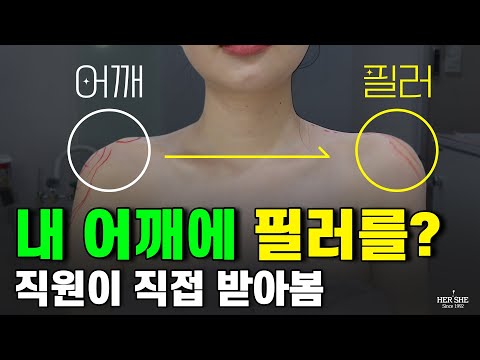 어깨필러 상담부터 시술과정까지, 직각어깨 REAL 현장
 쌍수하고 술 언제부터 마셔도 되나요?


 이전글
이전글