
HERSHE News
Fat Grafting vs. Liposuction: What Is the Difference, and Which Is Right for Me?

When receiving consultation at a plastic surgery clinic, you often hear the terms fat grafting and liposuction.
Because both procedures have ‘fat’ in their names, it is easy to think that they are similar surgeries,
but in reality, their purposes and methods are quite different.
Simply put, fat grafting adds fat to areas that lack volume, while liposuction removes unwanted accumulated fat.This is the essential distinction.
So, can people whose faces look pale need fat grafting?
If you are concerned about the flab in your abdomen or thighs, is liposuction the right answer?
Also, if I remove my fat and put it in another area, can liposuction and fat grafting be done at the same time?
Today, we will take a look at the differences between fat grafting and liposuction, in what cases each can be considered,
the fat survival rate of fat grafting, and changes in body shape after liposuction.

Fat grafting and liposuction, what is the biggest difference?
The first thing to remember is that fat grafting and liposuction have almost opposite goals.
Fat grafting: This is a method of harvesting the required amount of fat from other parts of the body, then refining it and transplanting it to areas lacking volume.
representatively forehead , ball , nasolabial area , chinless ,chest ,ass It can be utilized to supplement volumes such as .
Liposuction: On the other hand, liposuction is a method of directly removing fat from areas where fat is relatively accumulated,
such as the abdomen, thighs, upper arms, and flanks.
Therefore, to summarize the two things in one sentence, Fat grafting = adding volume where it is lacking,
Liposuction = removing excess fat where it has accumulated. This is an easy way to understand the difference.

In what cases can fat grafting be considered?
When you look at your face in the mirror, you may want to consider fat grafting if there is an area that looks particularly flat or worn out.
A representative example is facial fat grafting.
If the distribution of facial fat changes as you age or your face lacks congenital volume,
If your forehead looks flat
When the ball appears to be off
When the nasolabial area appears deep
When the area under the eyes looks sunken
When the chin tip appears to lack volume Fat grafting may be considered in
, etc.
However, the important thing here is that fat grafting does not necessarily mean that it is a good idea to add a lot of volume.
Because the skin thickness, fat distribution, and skeleton are different for each part of the face, the amount and location required may vary.
What does “fat survival rate” mean in fat grafting?
When looking into fat grafting, you often come across the word survival rate.
Simply put, engraftment refers to the process where some of the transplanted fat receives blood supply and becomes established as one's own fat tissue.
Even though fat grafting has been performed, this does not mean that all the injected fat remains.
In the early stages after surgery, the volume may decrease compared to the beginning due to swelling and tissue reaction, and will then go through a stabilization process.
Therefore, in fat grafting, not only “how much fat was injected,” but also which fat was harvested,
how it was purified, and where and how it was injected can be important factors.

In what cases can liposuction be considered?
Conversely, liposuction can be considered if you want to reshape the body in areas where a lot of fat is accumulated.
Representative parts are Abdomen , side ,thigh , forearm etc. Around the floating room, etc.
In particular, liposuction may be considered if the overall weight has been reduced through exercise or diet, but relatively fat remains in certain areas.
Is removing more fat always better with liposuction?
This is an area that people who are considering liposuction are especially curious about.
In short, the goal of liposuction is not to remove as much fat as possible.
This is because excessive removal of fat may cause problems such as the surface appearing uneven
or the left and right balance changing depending on the condition of the skin and tissue.
What matters in liposuction is not simply removing a large amount,
but accurately determining the amount of pure fat and the appropriate amount to remove for the individual’s body shape.
Even with the same abdominal liposuction, each person is different. Thickness of fat , skin elasticity , Shape of the abdomen ,
connection between the side and waist , left and right asymmetry , Muscle location etc. are different.
Therefore, rather than approaching it by removing the same amount of the same area, it is necessary to design a line based on the individual's body type.

Can liposuction and fat grafting be done at the same time?
There are cases where it is possible.
Although they may seem like completely separate surgeries, in some cases liposuction can remove unwanted fat while
the harvested autologous fat is grafted into an area that needs volume.
for example Method of reducing fat in the waist and flanks → Compensating for insufficient volume in the pelvis or hips Like ,
different purposes can be considered simultaneously.
The buttock fat-grafting page on the HERSHE Plastic Surgery website also explains that skeletal structure,
body shape, degree of sagging, and areas lacking volume are assessed together,
We guide you through the use of liposuction and fat grafting by planning the area that needs fat and the area that needs to be removed.
However, this is not for everyone.
If you have a skinny body with not enough fat, or if the area requiring fat removal is less clear than the area to be transplanted, the method may be different.
Fat grafting and liposuction, which method is right for me?
Now for the most important part.
Are you worried about your face looking pale? → Fat transplantation may be considered.
This may be especially true if you want to compensate for areas that lack volume, such as the forehead, cheeks, nasolabial folds, or chin.
Are you worried about the flab in your abdomen or thighs? → Liposuction may be considered.
If it is difficult to sufficiently reduce fat in the desired area through exercise and diet alone, you can consider liposuction by analyzing your body type.
What if you want to reduce your waist and add volume to your pelvis or hips? → There are cases where liposuction and fat grafting are considered together.
This is a method to adjust the overall silhouette by removing fat from the waist and flanks and transplanting autologous fat to necessary areas.
What if you are concerned about fat on both your face and body?
In this case, rather than blindly deciding on liposuction, it is better to first check which areas have a lot of fat and which areas lack volume.

Things to check when choosing fat grafting and liposuction
1. First, clearly identify the ‘problem area’
“I want to lose weight” and “I want to add volume to my face” are completely different concerns.
Liposuction focuses on areas with a lot of fat accumulated, while fat grafting focuses on areas with insufficient volume.
2. View overall body shape and face ratio together
For example, just because the ball is out, it is not the right answer to fill the entire ball.
It is best to look at the volume relationship of the forehead, temples, cheeks, chin, etc. to plan a natural result.
In liposuction, it may be more important to look at the surrounding lines, such as the waist, flanks, and pelvis, rather than looking at the abdomen separately.
3. Considering the engraftment process for fat grafting
The appearance of fat grafting immediately after the procedure may not be the same as the final result.
It requires initial swelling and tissue reaction to stabilize over time.
Therefore, if you have an important schedule, you should consider sufficient recovery period.
4. Check skin elasticity when considering liposuction
Just removing fat does not solve all body shape concerns.
This is because results may vary depending on not only the amount of fat but also the degree of skin elasticity or sagging.
You should also check whether there is a lot of fat, whether the skin is saggy, and whether the muscles or skeleton are greatly affected.
What about fat grafting, liposuction, and recovery after surgery?
For fat grafting, the surgery time is about 1 hour and the recovery period is about 4 days, and for liposuction,
the surgery time is about 2 hours and the recovery period is about 7 days.
However, these are general guidelines provided by hospitals and may differ from person to person.
In particular, with liposuction, swelling, bruising, and pulling sensations may vary depending on the scope and area of surgery.
Fat grafting may also require recovery at both the grafted and harvested sites.
Therefore, rather than thinking that “you will definitely recover in a few days,”
it is better to schedule it based on the scope of the surgery and the individual's recovery status.

Fat grafting and liposuction, if you are wondering which to choose
In the end, the important thing is not to follow other people's surgical practices, but to accurately understand your current condition.
1. If you have this concern, you may want to consider fat grafting.
When the entire face looks off
If your forehead looks flat
If your cheeks look sunken
When the volume in the nasolabial area appears to be lacking
If you look like you have no chin and want to supplement the volume of the chin
If you want volume supplementation using natural autologous tissue
2. If you have these concerns, you may want to consider liposuction.
If there is a lot of fat accumulated in the abdomen
If you are concerned about the flab on your flanks
If you are concerned about thigh fat
If you are concerned about arm or back fat
When fat in a specific area is not reduced well even with exercise and diet
If you want to organize your body shape and lines rather than your weight
However, these criteria are only general references. Actual suitability and the surgical method
The decision must be made after comprehensively checking the individual's health status, fat distribution, skin elasticity, and bone and tissue condition.

It is impossible to say which is a better surgery between fat grafting and liposuction. This is because the concerns that the two surgeries are trying to solve are different.
Fat grafting where fat is insufficient, Liposuction is performed on areas where fat is excessively accumulated.
And depending on your body type, you can consider both together.
In particular, when it comes to fat grafting, what kind of fat is collected, how to purify it, and how to inject it into the necessary area.
The important part of liposuction is where and how much fat is removed and how to connect it to the surrounding lines.
Therefore, when considering fat grafting or liposuction, rather than comparing only “how many cc will be added,” “how many cc will be removed,” or “how much it costs,”
first determine whether the desired change is to add volume or reduce fat, which areas of the face and body lack fat and which have excess fat,
and the condition of skin elasticity and overall proportions.This should be assessed first.
In the end, for good results, it is important to plan exactly what is needed for your face and body type rather than just adding or removing a lot of fat.
 다음글
다음글 게시물이 없습니다.

 힙업리프팅으로 애플힙 뒤태 만들수있나요? 힙업성형 Q&A
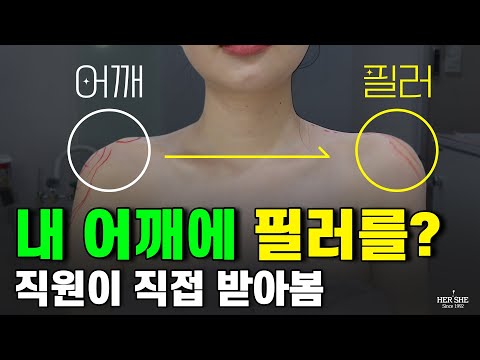 어깨필러 상담부터 시술과정까지, 직각어깨 REAL 현장
 쌍수하고 술 언제부터 마셔도 되나요?


 이전글
이전글