
HERSHE News
Which Eyes Are Suitable for the Buried-Suture Double-Eyelid Method? Conditions to Check Before Surgery

Hello, this is HERSHE Plastic Surgery. When considering double-eyelid surgery, many people wonder whether to choose the buried-suture or incisional method.
The buried-suture method creates a double-eyelid line with sutures without making a long skin incision. However, a smaller incision does not mean it is suitable for everyone.
Today, we will review the eye characteristics that may be suitable for the buried-suture method and the conditions to check before surgery.

What is the buried-suture double-eyelid method?
It is a surgical method that uses sutures in the eyelid to form a double-eyelid line.
Unlike a method involving a long skin incision, the incision range is small, and the surgical plan can be established according to the condition of the skin and eyelid tissues.
However, as it is still surgery, there are risks such as swelling, bruising, and infection, and the line may loosen or become undone over time.
Therefore, eyelid thickness, fat volume, skin sagging, and the function of opening the eyes should be assessed together before deciding on a surgical method.

Eye characteristics that may be suitable for the buried-suture method
1. Relatively thin eyelid skin
: If the eyelid skin is relatively thin and not severely sagging, the buried-suture method may be considered.
If the skin is thick or significantly sagging, another method may be more suitable.
2. A limited amount of eyelid fat
: The amount of upper-eyelid fat can affect the formation and shape of the double-eyelid line.
If excess fat makes the eyelid thick, it may be difficult to create the desired line with the buried-suture method alone, so an individual assessment is needed.
3. No severe skin sagging
If the eyelid skin is significantly stretched, the line may be covered by skin or it may be difficult to create the desired shape.
Depending on the degree of sagging, other methods such as the incisional method may be reviewed.
4. No major problem with the function of opening the eyes
: If the eyelid covers much of the pupil or the forehead muscles are used excessively to open the eyes,
an evaluation of eye-opening function, including possible ptosis, may be required.
In such cases, a medical diagnosis is needed to determine whether the buried-suture method alone is sufficient.
How do the buried-suture and incisional methods differ?
The buried-suture method has a smaller incision range,
while the incisional method can allow the surgeon to directly inspect and adjust the skin and surrounding tissues when necessary.
The more appropriate method varies according to eyelid skin thickness, fat volume, degree of sagging, and the desired double-eyelid shape.
Rather than deciding based only on recovery time or whether an incision is made, it is important to determine which method suits the current eye condition.

What are the differences between the buried-suture and incisional methods?
They differ in how the double-eyelid line is formed and in the range of tissues that can be adjusted.
1. The buried-suture method forms the line with sutures and involves a relatively small skin incision.
It may be considered when eyelid skin sagging is not severe and extensive adjustment of internal tissues is not required.
2. The incisional method forms the line while inspecting internal tissues through a skin incision.
When necessary, surrounding tissues such as skin or fat can also be adjusted, so the method is reviewed according to eyelid condition.
The differences can be summarized as follows.
Skin incision: The buried-suture method is relatively limited, while the incisional method involves a skin incision.
Tissue adjustment: The incisional method allows direct inspection and adjustment of internal tissues as needed.
Recovery: Swelling and bruising can occur with either method, and the degree and duration of recovery vary by individual.
Possibility of loosening: With the buried-suture method, the line may loosen depending on suture fixation and tissue condition;
the shape may also change over time after the incisional method.
Rather than concluding that one method is superior,
it is important to choose after considering eyelid structure, the desired line, and postoperative care comprehensively.
Will the buried-suture double-eyelid line loosen over time?
One frequent concern among people considering this method is how long the line will remain stable.
Because the line is formed with sutures, fixation may loosen or part of the line may become undone over time.
The following factors may influence this possibility.
1. Thickness of the eyelid skin and internal tissues
2. Amount of eyelid fat and degree of sagging
3. Suturing method and fixation condition
4. Individual tissue characteristics and recovery process
However, these factors alone cannot accurately predict whether the line will loosen.
Receiving the buried-suture method does not mean it will necessarily loosen,
and the incisional method does not guarantee that the double-eyelid shape will remain permanent.
Before surgery, it is advisable to discuss whether the buried-suture method can be considered for your eye condition and the possibilities of loosening and revision surgery.

Recovery after buried-suture double-eyelid surgery
Although the incision range is relatively small, swelling or bruising may occur after surgery.
Recovery varies according to skin condition and surgical method, so it is difficult to state that swelling will disappear or the line will be finalized at a specific time.
The following information may be helpful after surgery.
Immediately after surgery: Swelling, bruising, and tightness may occur. Care for the wound as instructed and avoid rubbing the eye area strongly.
Early recovery: Swelling may gradually decrease, but each eye may recover at a different rate.
Avoid strenuous exercise or strong stimulation around the eyes and follow the provided care instructions.
Monitoring recovery: As swelling decreases, the line may also change. Rather than judging the final shape too early,
it is important to monitor progress according to the scheduled follow-ups.
If pain worsens or sudden vision changes, severe asymmetry, or rapidly increasing swelling occurs, contact a medical institution immediately for evaluation.

정Preoperative checklist for buried-suture double-eyelid surgery
Check the following before deciding on a surgical method.
1. Check the eyelid condition.
Assess skin thickness, fat volume, and the degree of sagging to determine whether the buried-suture method is suitable.
2. Check the function of opening the eyes.
Evaluate possible eyelid drooping or ptosis and consider another corrective method if necessary.
3. Discuss the desired double-eyelid line in detail.
It is important to create a realistic surgical plan that considers not only the desired eye shape but also the current eye structure and facial proportions.
4. Check possible side effects and the possibility of revision surgery.
Receive a thorough explanation of potential issues such as swelling, bruising, infection, asymmetry, and line loosening, as well as how they would be managed.
HERSHE Plastic Surgery emphasizes the importance of developing an individualized surgical plan
by assessing eye size and shape, eyelid condition, and overall facial proportions together.

The buried-suture method may be considered when eyelid skin sagging is not severe and the overall tissue condition is suitable.
However, the surgical method cannot be determined solely because the eyelid is thin or has little fat.
The condition of the skin and internal tissues and the function of opening the eyes,
as well as the desired double-eyelid line, must be assessed comprehensively.
It is important to decide carefully while considering individual eye structure and facial proportions,
and to understand the characteristics of both methods and confirm the suitable method and postoperative care plan through consultation with medical staff.
 다음글
 게시물이 없습니다.


 힙업리프팅으로 애플힙 뒤태 만들수있나요? 힙업성형 Q&A
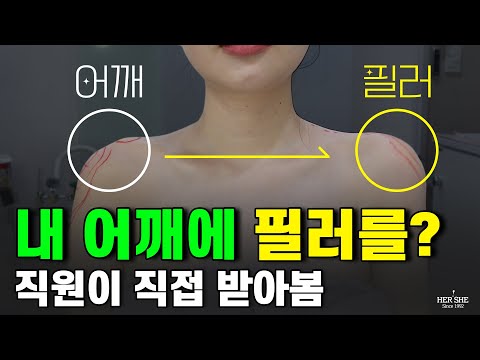 어깨필러 상담부터 시술과정까지, 직각어깨 REAL 현장
 쌍수하고 술 언제부터 마셔도 되나요?


PREFER TO CONTACT US DIRECTLY?
Choose one of the channels below to begin a direct conversation with our English consultation team.


 이전글
