
HERSHE News
How Many cc of Shoulder Filler Are Needed? Volume Selection Criteria to Know Before Treatment

Some people consider shoulder filler because they want their shoulder line to appear
more defined in clothing or the line from the neck to the shoulders to look naturally refined.
Because the shoulders influence overall upper-body proportions and the silhouette of clothing,
it is natural to consider how their volume and shape should be designed.
One of the most frequently asked questions is, “How many cc of shoulder filler do I need?”
When searching online for shoulder filler volumes, you may encounter figures such as 20cc, 30cc, and 50cc.
However, even with the same volume, the treatment plan may vary depending on the individual’s skeletal structure, shoulder shape, skin condition, and desired design.
Rather than simply injecting a larger amount, it is important to assess the current characteristics of the shoulders and plan an appropriate volume for the desired line.
For those wondering how many cc of shoulder filler they may need, this article explains the criteria for selecting the volume and the points to check before treatment.

How Many cc of Shoulder Filler Are Needed?
The first question that usually arises during a shoulder filler consultation concerns the injection volume.
HERSHE Plastic Surgery plans the volume by considering each person’s body shape, skin condition, and desired shoulder line,
and provides the following general reference ranges for an initial treatment.
Women: approximately 20~30cc on average
Men: approximately 20~50cc, depending on the desired design and body shape
These are general reference ranges provided by HERSHE Plastic Surgery and are not recommended amounts that apply equally to everyone.
The volume actually required should be determined through a medical consultation.
For men as well, the volume plan may vary according to the desired shoulder design.
The important point is that treatment outcomes or suitability cannot be determined by the number of cc alone.
Even with the same volume, the resulting contour may differ depending on the injection sites and distribution, filler characteristics, and the individual’s anatomical structure.
Rather than using another person’s treatment volume as a direct standard, it is advisable to establish a plan suited to your own shoulder condition.

Four Factors to Consider When Determining Shoulder Filler Volume
1. Current Shoulder Structure and Shape
The first point to assess is the current shoulder structure.
The approach may differ depending on whether the shoulders look narrow because of insufficient volume on the outer shoulders,
the shape of the shoulder tips, or the characteristics of the skeletal structure itself.
For example, shoulders with insufficient volume at the tips and shoulders that appear low overall are difficult to plan using the same design.
It is therefore important to examine not only the shoulder width from the front but also the contours viewed from the side and at an angle.
2. The Line from the Neck Through the Shoulders to the Arms
Shoulder filler should consider not only the volume of a specific area but also how it connects with surrounding areas.
The overall impression may vary according to the curve from the neck to the shoulders,
the shape of the clavicles, and the silhouette connecting the outer shoulders to the arms.
Instead of automatically injecting a large volume, it is necessary to assess which areas require additional volume to plan a natural-looking contour.
HERSHE Plastic Surgery describes shoulder filler as a design-based treatment that considers upper-body proportions and silhouette together,
rather than simply creating volume.
3. Condition of the Skin and Soft Tissue
Even with the same skeletal structure, the treatment plan may vary according to skin elasticity and laxity, as well as the thickness of the existing soft tissue.
Because filler may take on different shapes depending on the injection area and tissue condition,
the skin and tissue in the treatment area should be assessed before determining the volume.
Especially for an initial treatment, it is advisable to discuss your current condition
and goals thoroughly with the medical team rather than deciding on a specific volume in advance.
4. Desired Direction of the Shoulder Line
The purpose of considering shoulder filler is also an important criterion.
The design direction may differ between someone who wants to supplement insufficient volume on the outer shoulders and someone
who wants a more angular upper-body silhouette.
Some women may prefer a natural, soft shoulder line, while some men may want to create the appearance of a more solid shoulder frame.
Of course, these preferences are not determined by gender and vary according to individual taste and body shape.
During consultation, rather than simply saying that you want broader shoulders, it is helpful to explain which part of the contour concerns you,
and what kind of line you would like when wearing particular types of clothing.

How Do 20cc, 30cc, and 50cc of Shoulder Filler Differ?
When researching shoulder filler, it is common to compare volumes such as 20cc, 30cc, and 50cc.
However, increasing the volume does not widen everyone’s shoulders by the same proportion or create the desired shape in every case.
Please refer to the following when interpreting the different volume figures.
1. Around 20cc
This range may serve as a reference when planning a relatively small volume after assessing the current shoulder shape and desired design.
However, this does not mean that 20cc is appropriate or sufficient for everyone.
2. Around 30cc
This volume falls within the general reference range provided by HERSHE Plastic Surgery for women undergoing an initial treatment.
The actual plan should also consider shoulder size, areas lacking volume, and the characteristics of the filler.
3. Around 50cc
This volume falls within the reference range provided in HERSHE Plastic Surgery’s guidance for male shoulder filler.
Even when a more solid frame is desired, the actual injection volume may vary according to the individual’s tissue condition and design.
The figures above are reference information intended to help explain volume. They do not guarantee a result for each volume or recommend a particular volume uniformly.
During consultation, it is also important to confirm whether the stated amount is the total volume injected into both shoulders or the volume for one side.
When comparing volumes, check whether the injection area and measurement criteria are the same.
Points to Check Before Shoulder Filler Treatment
Before deciding on shoulder filler, several points other than volume should also be checked.
1. Define Your Treatment Goals Clearly.
Identifying which part of your shoulders concerns you and whether you want a natural curve or a more angular contour can help during consultation.
2. Check Your Existing Shoulder Condition and Left-Right Balance.
The treatment plan may vary depending on existing left-right differences and skeletal characteristics.
Rather than expecting every asymmetry to be eliminated completely, it is advisable to discuss the options that may be considered based on your current condition.
3. Confirm the Type of Filler and Total Injection Volume.
Check the ingredients and characteristics of the product, the total injection volume including both sides, and the expected course and duration.
4. Inform the Medical Team About Current Medications and Previous Treatments.
Current medications or supplements, previous filler treatments, allergies, and related medical conditions are necessary information for the medical team to assess whether treatment is appropriate.
Do not stop any medication on your own; inform the medical team first.
5. Check Aftercare Instructions and the Possibility of Side Effects.
Swelling, bruising, and tenderness may occur after treatment. Although rare, serious side effects such as infection and vascular complications may also occur,
so it is important to check the aftercare instructions and how to contact the clinic if unusual symptoms develop.

When considering shoulder filler, the first question may be how many cc are needed.
However, rather than simply injecting a predetermined amount,
shoulder filler requires a volume plan that comprehensively considers the current shoulder shape and left-right balance,
the condition of the skin and soft tissue, and the desired shoulder line.
The general volume ranges provided by HERSHE Plastic Surgery may be used as reference information before consultation, but the actual treatment volume should be determined through an individual examination and design process.
If you are considering shoulder filler, discuss your shoulder shape and desired direction thoroughly rather than deciding by numbers alone,
and make a careful decision after confirming the treatment method, filler characteristics, and possible side effects.
 다음글
 게시물이 없습니다.


 힙업리프팅으로 애플힙 뒤태 만들수있나요? 힙업성형 Q&A
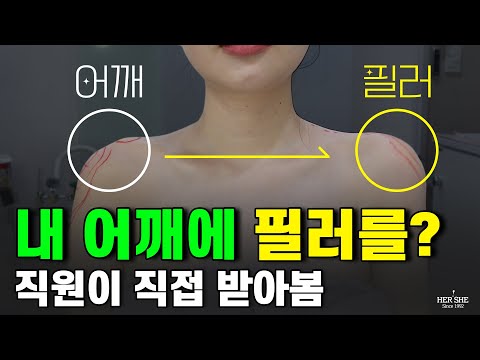 어깨필러 상담부터 시술과정까지, 직각어깨 REAL 현장
 쌍수하고 술 언제부터 마셔도 되나요?


PREFER TO CONTACT US DIRECTLY?
Choose one of the channels below to begin a direct conversation with our English consultation team.


 이전글
